
Nutrition matters for livestock
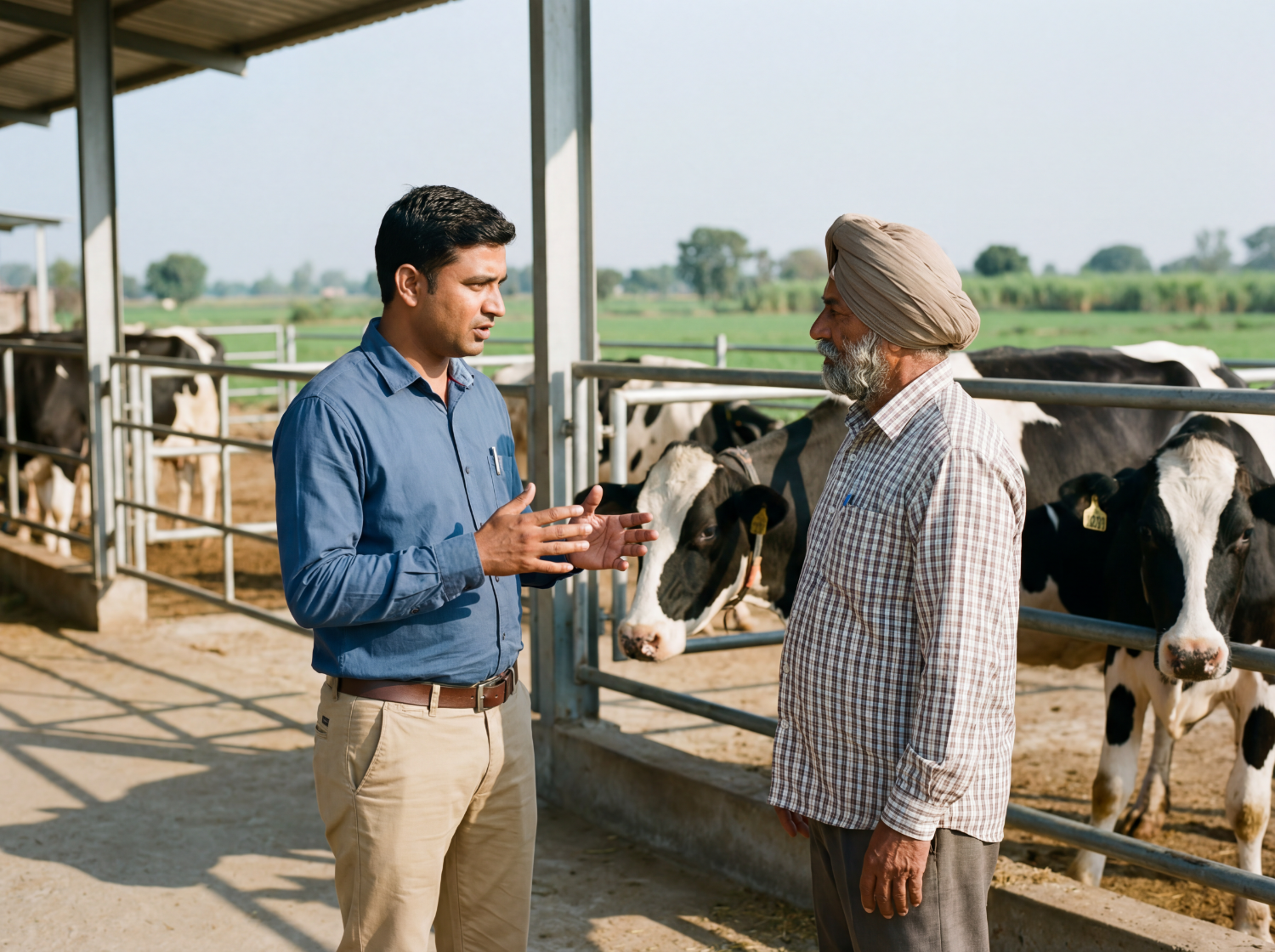
Animal nutrition is the single most important factor in determining livestock productivity, yet it remains one of the most overlooked areas in Indian farming. Whether we are talking about dairy cattle, buffaloes, goats, or poultry, what an animal eats directly shapes its growth rate, reproductive performance, disease resistance, and overall economic return.
The cost of nutritional gaps
In India, a significant proportion of livestock — particularly in smallholder systems — are fed on crop residues and unfortified fodder. While these feeds sustain the animal, they rarely meet the full spectrum of nutritional requirements. The consequences are not always dramatic: they show up as slightly lower milk yields, delayed conception, weaker calves, and a gradual decline in herd productivity that farmers often attribute to genetics or weather rather than diet.
Mineral deficiencies — particularly calcium, phosphorus, zinc, and copper — are widespread in Indian soil and therefore in the fodder grown on it. Subclinical deficiencies in these minerals can suppress immune function, reduce feed conversion efficiency, and lead to metabolic disorders such as milk fever and ketosis in high-yielding dairy animals. These are not rare conditions; they are everyday realities on Indian farms.
Rumen health as the foundation
For ruminants — cattle, buffaloes, sheep, and goats — the rumen is the engine of nutrition. A healthy rumen microbiome breaks down fibre, synthesises volatile fatty acids for energy, and produces microbial protein that the animal absorbs further down the digestive tract. When rumen function is compromised — through acidosis, sudden dietary changes, or poor-quality feed — the entire metabolic chain suffers.
This is where targeted supplementation makes a measurable difference. Probiotics such as Saccharomyces cerevisiae stabilise rumen pH, improve fibre digestion, and increase microbial protein synthesis. Trace minerals support the enzyme systems that drive metabolism. Amino acids like methionine and lysine — often limiting in Indian rations — are essential for milk protein synthesis and tissue repair.
Practical recommendations
The most effective nutritional strategy for Indian livestock farms combines three elements: quality base ration (green fodder plus concentrates), strategic mineral and vitamin supplementation tailored to the region and season, and rumen-support products during periods of stress — calving, peak lactation, heat stress, and dietary transitions.
Farmers who adopt a systematic approach to nutrition consistently report improvements: 10–15% higher milk yields, fewer reproductive failures, stronger calves, and lower veterinary costs. The investment in nutrition pays for itself many times over — not in theory, but in the daily reality of Indian farming.
Seasonal nutritional challenges in India
Indian livestock face distinct nutritional stress points throughout the year. During the monsoon season (June–September), fodder quality deteriorates rapidly due to high moisture content and mycotoxin contamination. Animals consuming mould-affected feed show reduced appetite, lower milk output, and increased vulnerability to liver damage. Pre-monsoon mycotoxin binders and quality hay reserves are essential preventive measures.
Summer heat stress (March–June) creates a double burden: animals eat less precisely when their energy requirements increase. Body temperature regulation diverts metabolic resources away from production. Dairy cattle in Gujarat and Rajasthan routinely lose 15–25% of their potential milk yield during peak summer. Electrolyte supplementation, bypass fats, and antioxidant support (vitamin E, selenium, zinc) help bridge this nutritional gap.
Winter brings its own challenges in northern states. Cold stress increases maintenance energy requirements by 10–15%, and dry fodder availability often peaks while green fodder becomes scarce. Animals that enter winter without adequate body condition reserves are particularly vulnerable to production losses and delayed breeding.
The economics of nutritional supplementation
Farmers often view supplements as an additional cost rather than an investment. The data tells a different story. A controlled study across 120 dairy farms in Maharashtra showed that farms using a systematic mineral and probiotic supplementation programme spent an additional Rs 8–12 per animal per day on supplements but gained Rs 25–40 per day in additional milk revenue, reduced veterinary bills, and improved reproductive efficiency.
The return on investment becomes even more compelling when measured over a full lactation cycle. Cows that receive consistent nutritional support through the transition period (three weeks before to three weeks after calving) produce an average of 800–1,200 litres more milk per lactation than unsupplemented herd-mates. They also conceive earlier, reducing the calving interval and improving lifetime productivity.
Building a farm-level nutrition programme
An effective nutrition programme does not require expensive laboratory analysis for every animal. It starts with understanding the base ration — what fodder is available, what concentrates are being fed, and what the likely mineral profile of local soil and water is. Regional agricultural universities and veterinary colleges publish soil mineral maps that provide a good starting point.
From this baseline, farmers can work with their veterinarian or local distributor to select appropriate supplements. The key is consistency: sporadic supplementation delivers sporadic results. Animals need continuous access to balanced minerals, and strategic products (rumen conditioners, calcium boluses, energy supplements) should be timed to high-risk periods — transition, peak lactation, heat stress, and recovery from illness.
The farmers who achieve the best results are those who treat nutrition as a management system rather than a reactive measure. They plan feed procurement in advance, maintain supplement inventories, and monitor animal condition regularly. In an industry where margins are tight and competition is growing, nutrition is the lever that separates profitable farms from those that merely survive.