
Sustainable farming practices for Indian dairy
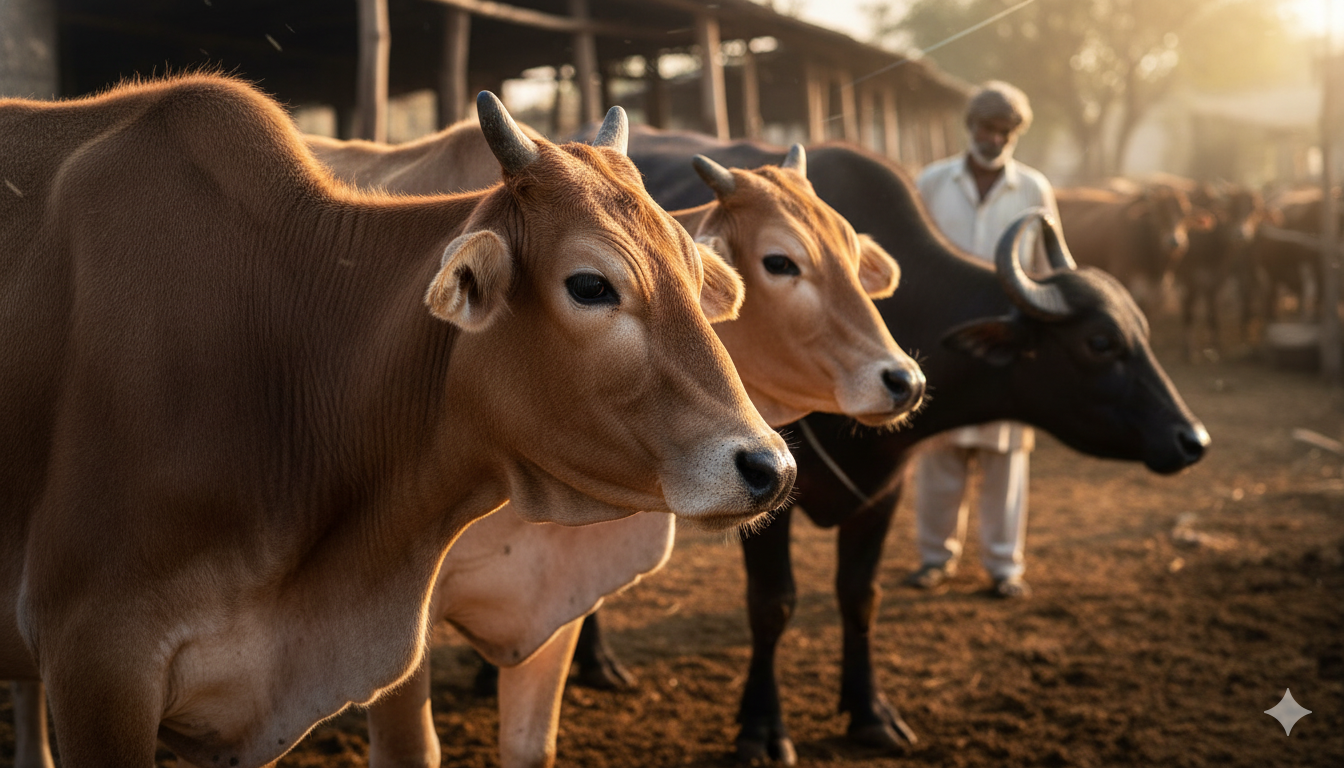
India is the world's largest milk producer, with over 230 million tonnes annually, and the sector employs more than 80 million rural households. Yet this scale comes with environmental costs: methane emissions from enteric fermentation, water pollution from untreated waste, and soil degradation from intensive fodder cultivation. The challenge for Indian dairy is not whether to become more sustainable, but how — in a way that works for smallholder farmers who operate on thin margins.
Feed efficiency as a sustainability lever
The single most impactful change a dairy farmer can make for both profitability and sustainability is to improve feed conversion efficiency. When an animal extracts more energy and nutrients from each kilogram of feed, it produces more milk per unit of input — and generates less methane per litre of milk produced. This is not a theoretical concept; it is measurable economics.
Rumen-optimising supplements — particularly live yeast cultures and ionophores — have been shown in Indian field trials to improve feed conversion by 8–12%. For a farmer milking ten crossbred cows, this translates to measurable gains in daily milk output without increasing feed costs. At the same time, improved rumen efficiency reduces enteric methane production per litre of milk by a comparable margin.
Reducing antibiotic dependency
Sustainable farming is also about reducing inputs that carry long-term risks. In Indian dairy, antibiotics are frequently used not just for treatment but as a prophylactic measure — to prevent mastitis, manage post-calving infections, or address chronic digestive issues. While effective in the short term, this practice contributes to antimicrobial resistance and can compromise milk quality.
The alternative is a prevention-first approach: maintaining animals in optimal health through balanced nutrition, targeted mineral supplementation, and proactive management during high-risk periods. Farms that have adopted this model — supported by veterinary guidance and quality health products — report significant reductions in antibiotic use alongside improved animal welfare and productivity.
Water and waste management
On the waste side, even simple interventions make a difference. Composting cattle dung for use as organic fertiliser returns nutrients to the soil and reduces dependence on synthetic fertilisers. Biogas generation from dairy waste — increasingly adopted by mid-sized Indian dairy operations — provides clean energy while managing effluent. These are not expensive, high-tech solutions; they are practical systems that pay for themselves within one to two seasons.
The future of Indian dairy is sustainable — not because of regulation or pressure, but because sustainability and profitability increasingly point in the same direction. Farmers who invest in feed efficiency, animal health, and waste management are not just protecting the environment; they are building more resilient, more profitable operations for the next generation.
Genetic improvement and sustainability
Breeding decisions made today will shape herd productivity and environmental impact for decades. The trend toward exotic crossbreeds — particularly Holstein Friesian crosses — has driven impressive yield gains in Indian dairy, but it has also introduced animals that are less adapted to heat, local diseases, and variable feed quality. The result is higher input costs and greater vulnerability to production losses.
A more sustainable approach balances productivity with resilience. Indigenous breeds like Gir, Sahiwal, and Red Sindhi — and their judicious crosses with exotic breeds — offer a combination of heat tolerance, disease resistance, and moderate productivity that suits Indian conditions. Progressive breeding programmes supported by NDDB are using genomic selection to identify animals that combine high yield potential with adaptability, offering a path toward sustainable intensification.
Fodder management and land use efficiency
India faces a chronic green fodder deficit estimated at 35% of requirements. This gap drives dependence on crop residues and purchased concentrates, increasing costs and reducing nutritional quality. Sustainable dairy farming requires addressing this deficit at the farm level through improved fodder cultivation practices.
High-yielding perennial grasses like Napier (Bajra-Napier hybrid) and Guinea grass can produce 150–200 tonnes of green fodder per hectare per year — five to ten times the yield of traditional fodder crops. Silage making, once considered impractical for smallholders, is now accessible through low-cost bag silage technology that preserves excess monsoon fodder for lean months. These interventions reduce feed costs, improve nutritional consistency, and decrease the carbon footprint per litre of milk produced.
The role of cooperatives and collectives
Individual smallholder farmers — who typically manage 2–5 animals — face significant barriers to adopting sustainable practices. Bulk purchasing of quality feed and supplements, access to veterinary services, and investment in waste management infrastructure all benefit from scale. Dairy cooperatives and farmer producer organisations (FPOs) provide this scale, enabling collective procurement, shared resources, and knowledge exchange.
Cooperatives also create market incentives for sustainable practices. Premium pricing for antibiotic-free milk, quality-tested supply chains, and certification programmes give farmers a direct economic reason to adopt better management. When sustainability pays — and it increasingly does — adoption follows naturally. The most successful sustainable dairy initiatives in India are those built on cooperative structures that align farmer economics with environmental goals.
The transformation of Indian dairy toward greater sustainability is not a distant aspiration — it is happening now, farm by farm, cooperative by cooperative. The farmers leading this change are not idealists; they are pragmatists who recognise that better animal health, better feed management, and better waste handling all point in the same direction: a more profitable and more resilient dairy business.